The original Sony PlayStation (PS1) hit Japan in 1994 and the U.S. in 1995. It wasn’t just another console — it was the machine that dragged gaming into the 3D era and made discs the standard. Ironically, it started as a failed Nintendo partnership. Sony was supposed to build a CD add-on for the SNES. When the deal collapsed, Sony went solo — and changed gaming forever.
Launch & Price
- Japan (Dec 1994): ¥39,800 (~$387).
- U.S. (Sept 1995): $299. Sony undercut Sega Saturn’s $399 price and stole the show at E3.
- In today’s money, that’s around $600.
It was sleek, cheap for a CD system, and easy for developers to make games on. Within a few years, it buried Sega Saturn and cut deep into Nintendo 64’s market.
Hardware & Models
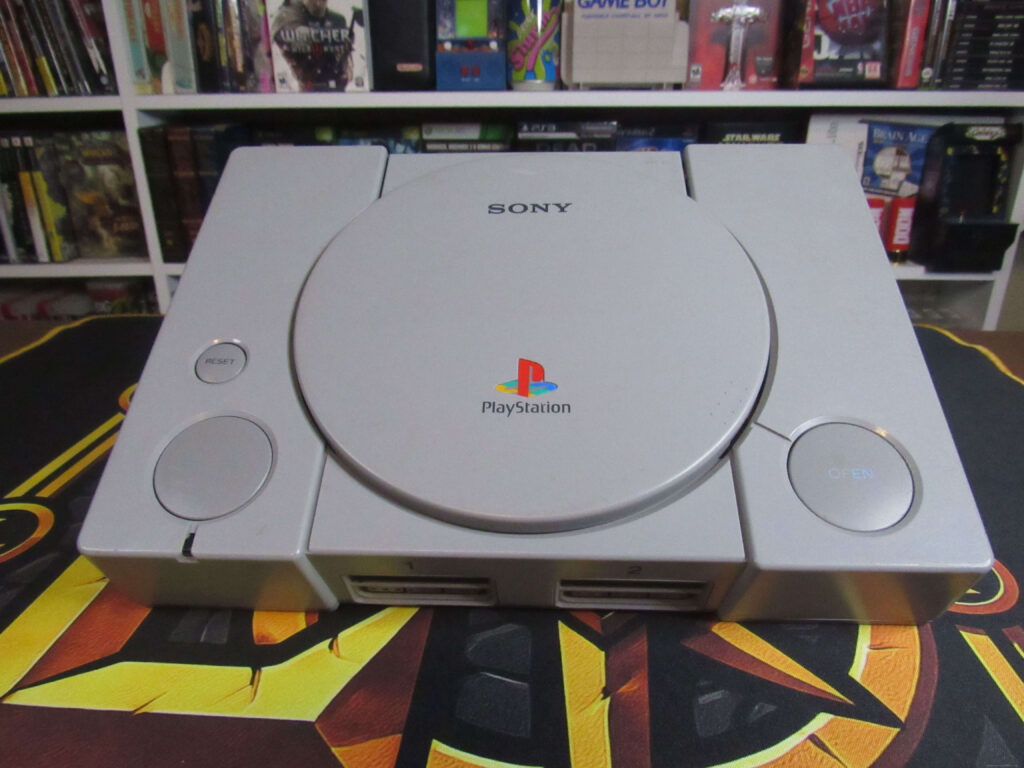
- Original Gray (1995): Disc tray, memory card slots, two controller ports. Built like a tank, but lasers wear out.
- Model SCPH-7501 onward: Adjusted internal layout, better reliability. Some had issues with overheating lasers.
- PSOne (2000): Slim white redesign. Compact, portable, popular late in its life.
Collector note: Later models often had weaker laser assemblies — early models are tanks, but need maintenance now.
Accessories & Peripherals
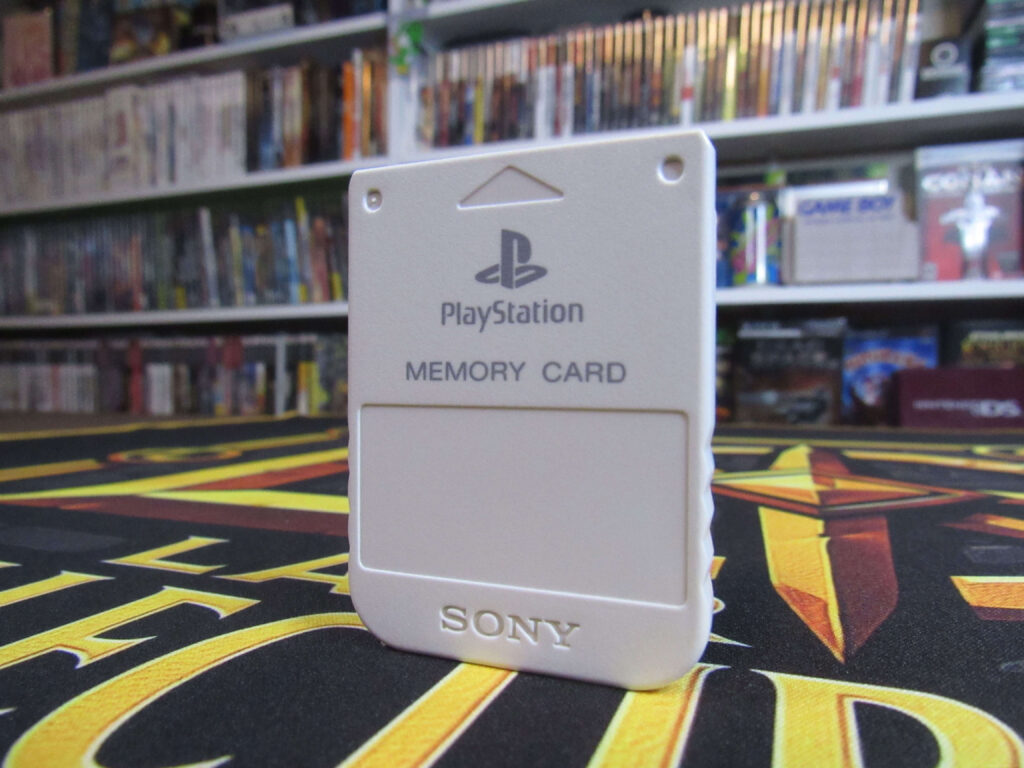
- Memory Cards: 15 blocks each. If you were into RPGs, you owned half a dozen.
- Dual Analog → DualShock controllers: Added vibration and analog sticks, forever changing controller design.
- Multitap: 4-player support for games like Bomberman and Crash Team Racing.
- Light Gun (GunCon): For Time Crisis. Like the NES Zapper, only works on CRTs.
Cheat Codes & Secrets
- Tomb Raider – All Weapons: Pause, press L1, R2, Circle, Down, L1, R2, Circle, Down.
- Crash Bandicoot – 99 Lives: At the title screen, press Up, Up, Down, Down, Left, Right, Left, Right, Circle, X.
- Tony Hawk’s Pro Skater – Unlock Officer Dick: Complete Career Mode with a character. Not really a code, but a rite of passage.
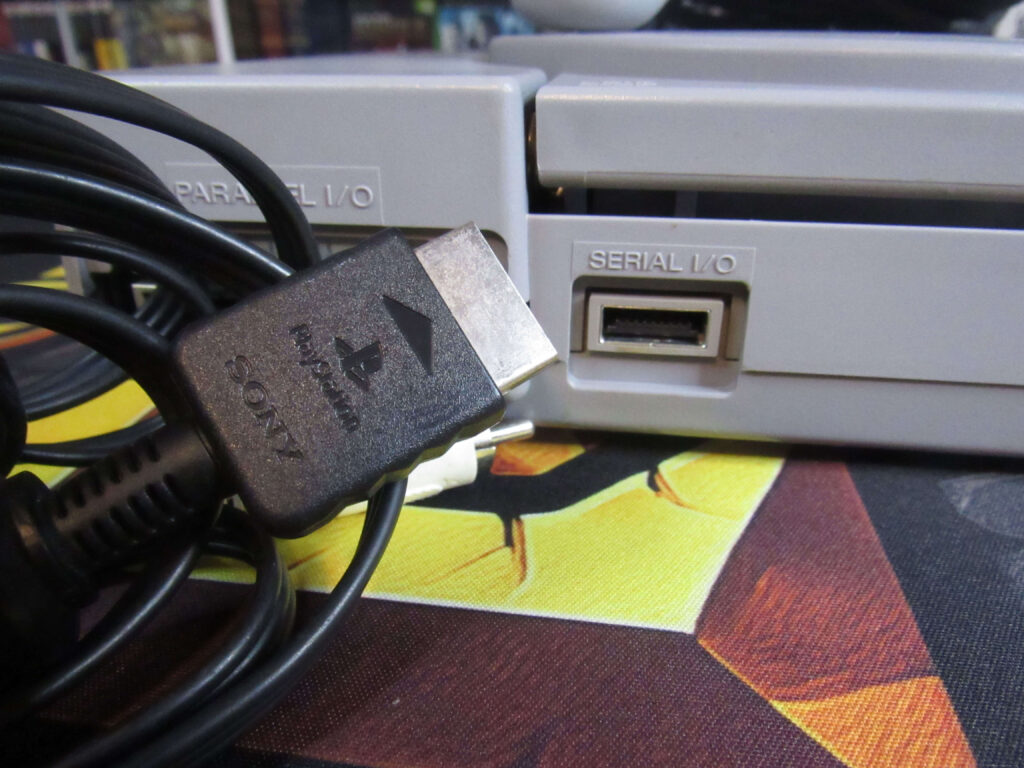
Video Output (AV Out):
Uses the Sony Multi-AV connector (same style later used on the PS2 and PS3). (Above)
With the included AV cable (yellow for video, red/white for audio) you got the standard hookup for almost every TV of the era.
Higher-end options existed too, like S-Video or RGB SCART, but most people stuck with the basic AV.
Also has an RF adapter option for older TVs (rarely used, fuzzier picture).
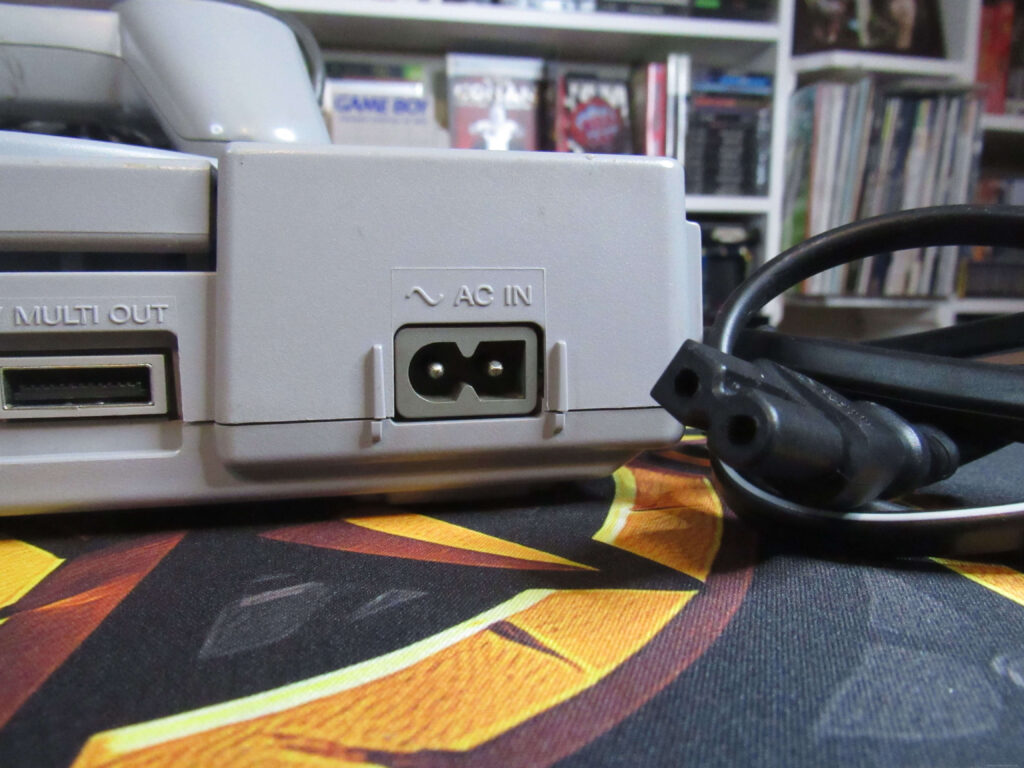
Power Supply:
The original PlayStation (SCPH-1001 through the slim PSOne) uses a simple two-prong AC power cord. (Above)
Unlike Sega’s big power bricks, this was just a standard cord that plugs straight into the back of the console and into the wall.
Easy to replace — the same style was used for radios, DVD players, and tons of electronics in the ’90s.
Collecting in 2025
- Consoles:
- Original PlayStation: $80–$150.
- PSOne Slim: $100+.
- Games:
- Common discs (Madden, Gran Turismo) are cheap.
- Key titles (Suikoden II, Valkyrie Profile, Klonoa): hitting $300–$600 loose.
- Sealed RPGs: thousands. Long-box launch titles (tall jewel cases) are grails.
- Accessories: Boxed DualShock controllers and official memory cards in packaging are creeping up.
Fun Facts & Collector Tips
- Sony’s E3 1995 mic-drop moment: Sega announced Saturn at $399. Sony exec walked up, said “$299,” and left. That’s it.
- The PlayStation’s open architecture made piracy rampant — mod chips were everywhere.
- The “PlayStation Underground” demo discs are their own collectible scene.
Where to Buy
Wrap-Up
The PlayStation was more than a console — it was a cultural reset. It took gaming mainstream, brought 3D into homes, and built franchises like Final Fantasy VII, Resident Evil, Metal Gear Solid, and Gran Turismo. For collectors, it’s a system packed with nostalgia and spiking prices, especially on RPGs and sealed titles.