Pokémon cards are hotter than ever in 2025 — but with demand at an all-time high, the market is flooded with fake and counterfeit cards. For beginners, spotting a fake card can be tricky, and getting scammed is a quick way to lose money.
Here We Go!
Pokémon Pack Differences: Real vs Fake
When looking at booster packs, the seal is a big giveaway. Real Pokémon packs are heat-sealed in a clean, straight crimped line along the top and bottom. Fake packs, on the other hand, are often sealed with uneven, spiky, or triangle-shaped cuts that look sloppy compared to the smooth, uniform edges of authentic packs. This small detail can quickly tell you if a pack is real or not.
- Seal Edges: Real packs have straight, uniform crimps, while fake packs often show jagged or triangle-shaped cuts.
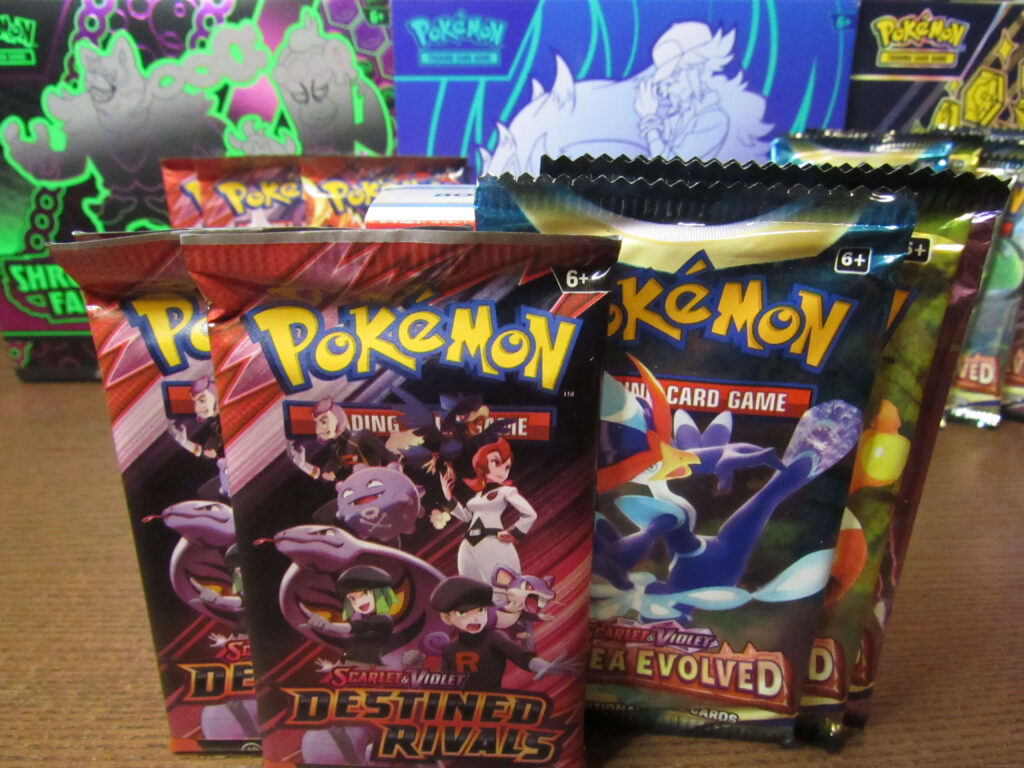
(The left pack is real. The right pack is fake.)
The Black Liner Test
A reliable way to check authenticity is by looking at the edge of the card—real Pokémon cards have a thin black or dark blue line running through the middle of the cardstock, while fake cards usually lack this liner and instead show only plain white or uneven layers.
-
Real Cards: Authentic Pokémon cards have a thin black (or dark blue) line sandwiched in the middle of the card stock, visible when you look at the edge.
-
Fake Cards: Counterfeits usually lack this inner liner, showing just plain white or inconsistent layers instead.
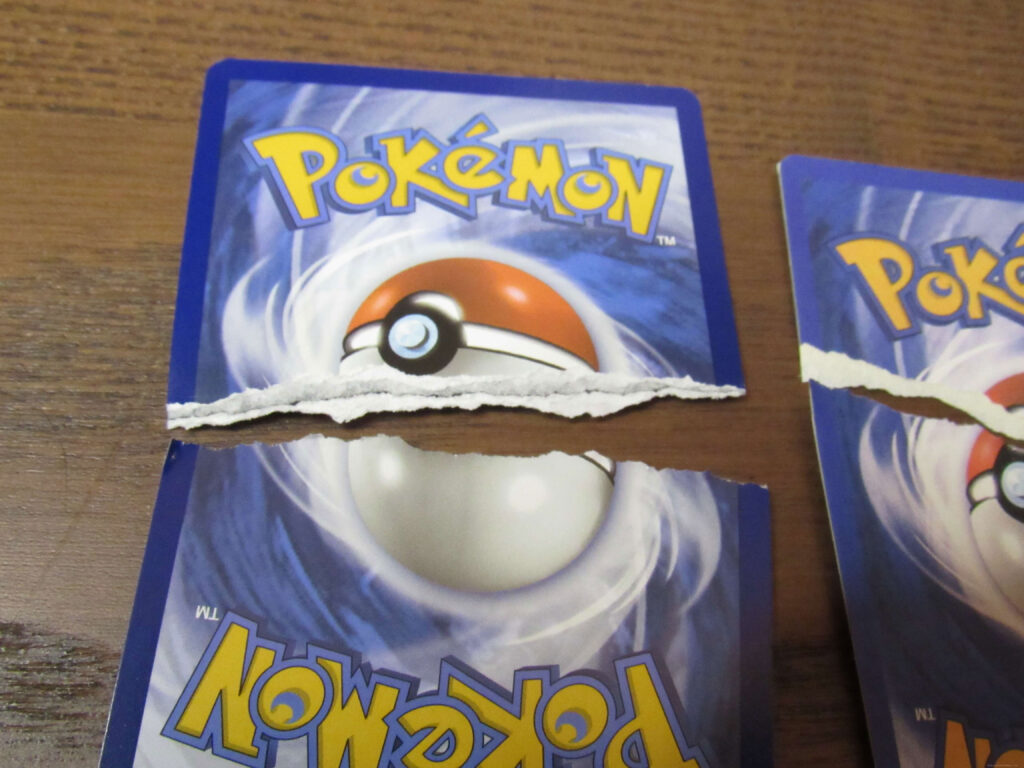
(The left card is real. The right card is fake.)
The Light Test
Real Pokémon cards have a special black inner layer that you can see if you shine a bright light through the card or tear it in half. Counterfeits usually lack this and feel thin or plasticky. To use the light test, simply get a flashlight and shine it under the card. Two things will happen. 1 The light will shine thru or 2, The light will not shine thru. Real cards will not allow light thru due to the black inner layer. Fake cards have no inner layer and the light will shine right thru.
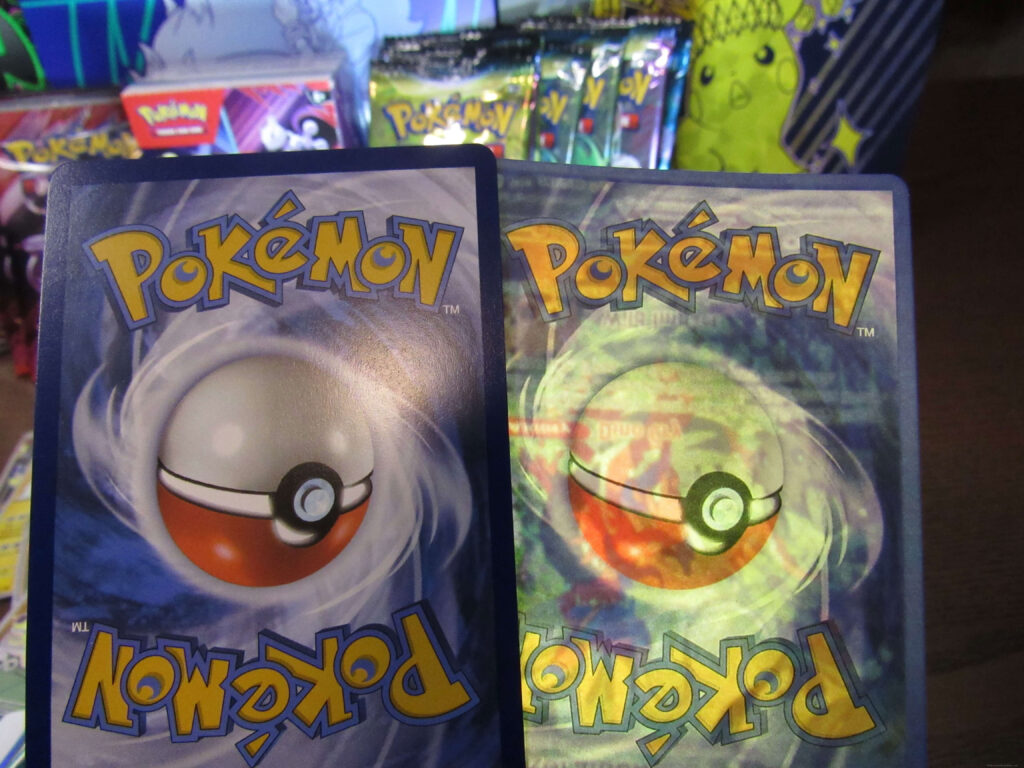
(The left card is real. The right card is fake.)
Inspect the Back of the Card
The back of a real Pokémon card has a deep, vibrant blue border that looks evenly printed, with smooth gradients around the Poké Ball. Fake cards often give themselves away here—the blue may appear too light, too dark, or uneven, sometimes even looking faded or blotchy. The difference in coloring is one of the quickest ways to spot a counterfeit.
- Authentic Pokémon cards have a consistent blue swirl pattern on the back.
- Fakes often use the wrong shade of blue or have off-center borders.
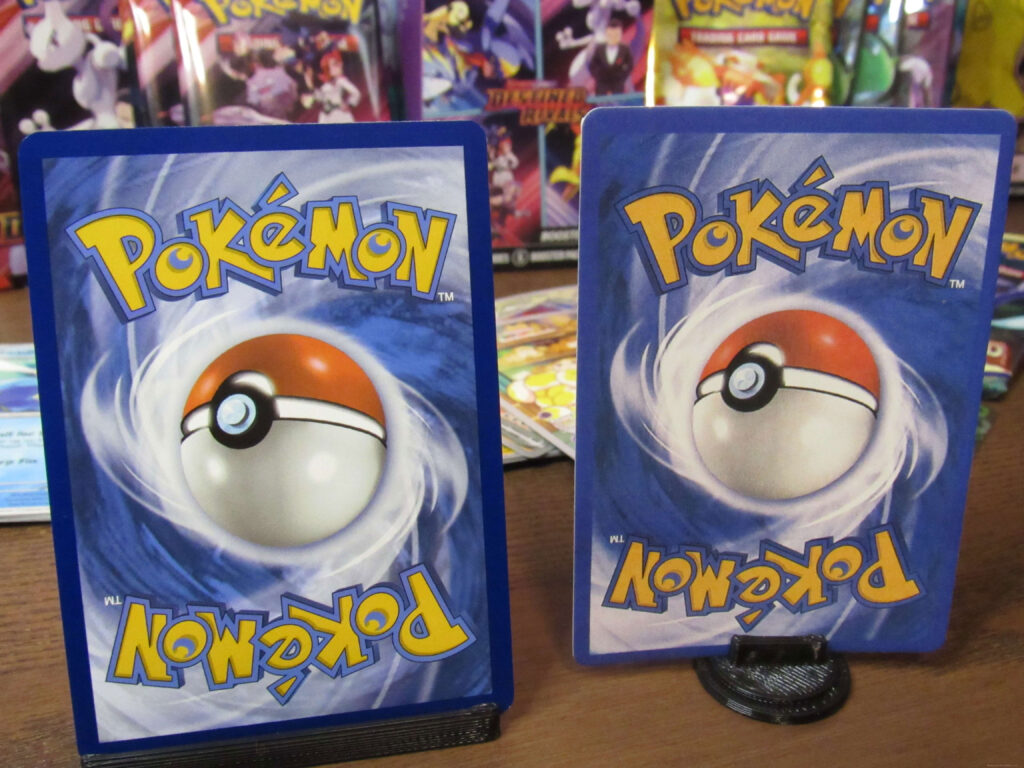
(The left card is real. The right card is fake.)
Look at the Colors & Font
- Fake cards often look blurry, washed out, or have strange lettering.
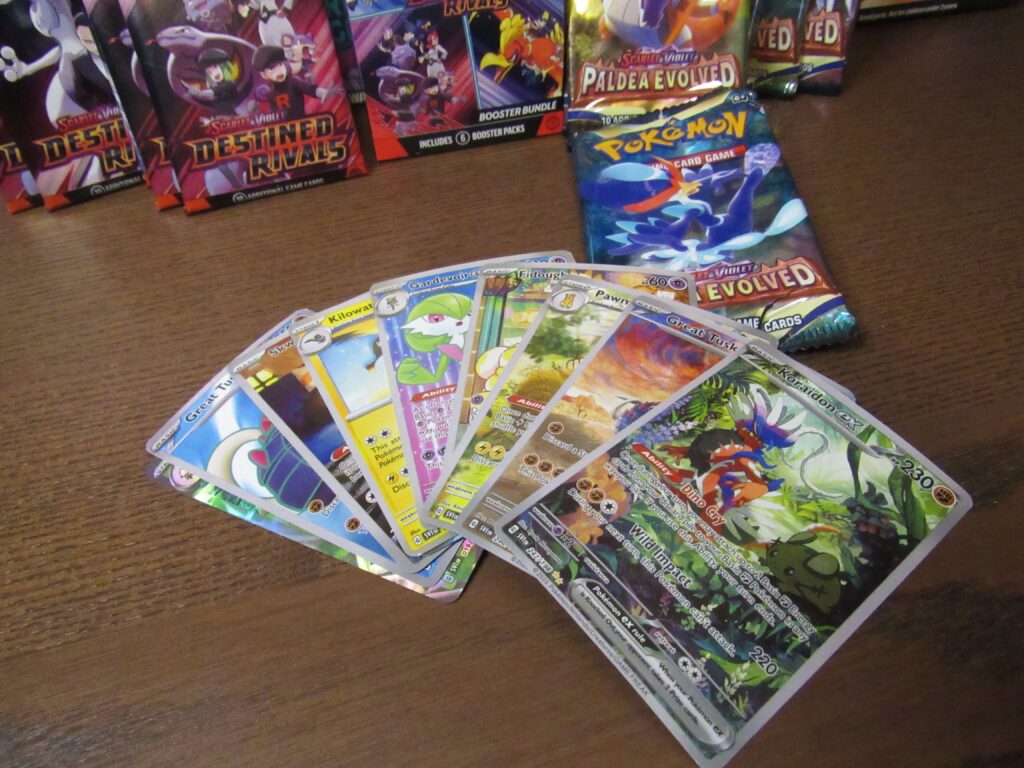
(All cards are Fake.)
- Genuine Pokémon cards have vibrant colors and clean, sharp fonts.
Holographic Colors & Patterns
- Real holo cards use specific patterns depending on the set (Galaxy, Starburst, etc.).
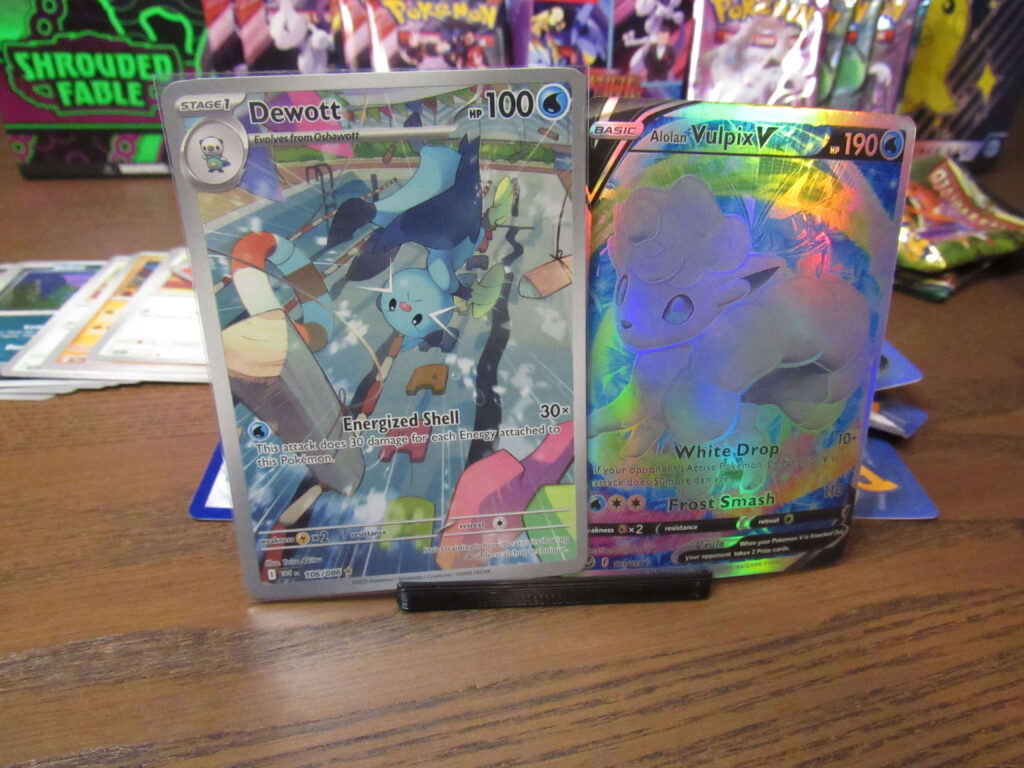
(The left card is real. The right card is fake.)
- Fake holos look like cheap glitter or foil stickers.
Weight & Texture
- Pokémon cards have a consistent weight and feel.
- Counterfeits may feel lighter, waxy, or thicker than normal.
Conclusion
Spotting fake Pokémon cards takes practice, but once you know the signs — font clarity, color vibrancy, card stock, and holo pattern — you’ll never be caught off guard. Combine these tricks with your new knowledge, and your collection will stay safe, authentic, and valuable for years to come.