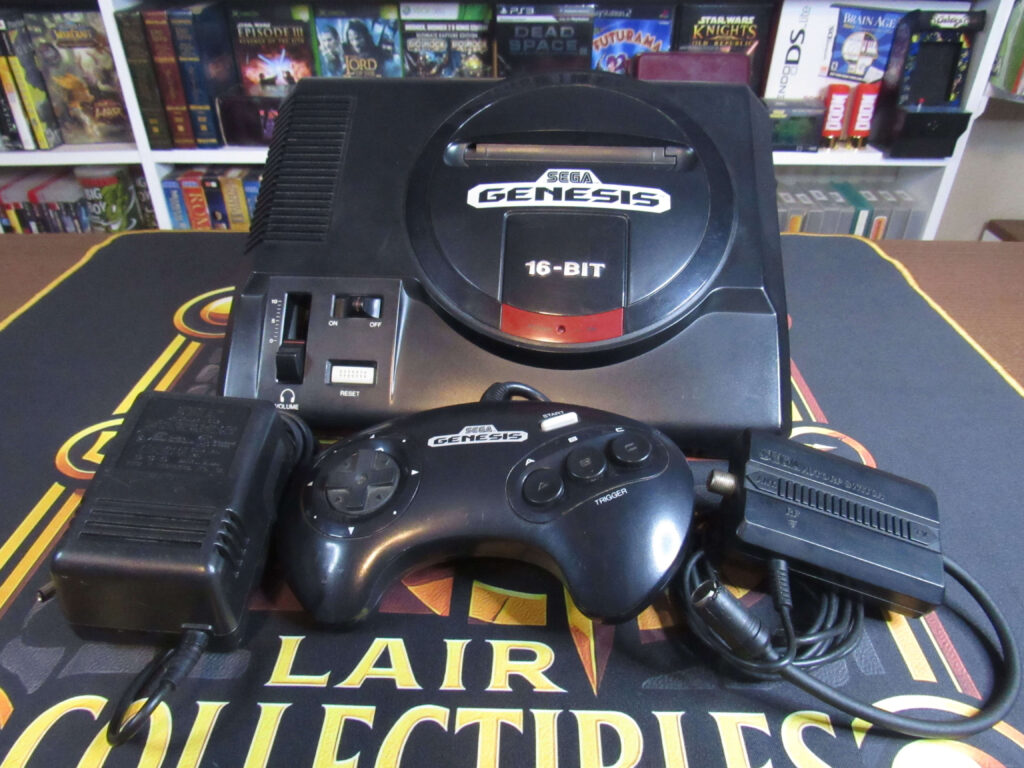
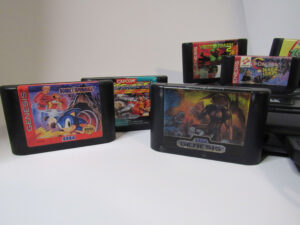
When the Sega Genesis (aka Mega Drive outside North America) launched in 1989 in the U.S., Sega wasn’t just selling a console — they were swinging at Nintendo’s dominance. Nintendo owned over 90% of the U.S. market with the NES, and Sega needed a killer move. Their marketing slogan said it all: “Genesis does what Nintendon’t.”
Launch & Price
- North American release (August 14, 1989): Came packed with Altered Beast for $189.99.
- Later bundles swapped in Sonic the Hedgehog (1991), which became the system’s true mascot moment.
- Adjusted for inflation: around $450 today.
Sega banked on faster 16-bit hardware and edgier games to attract teens who thought Nintendo was “for kids.” It worked — at least for a while.
Models & Revisions
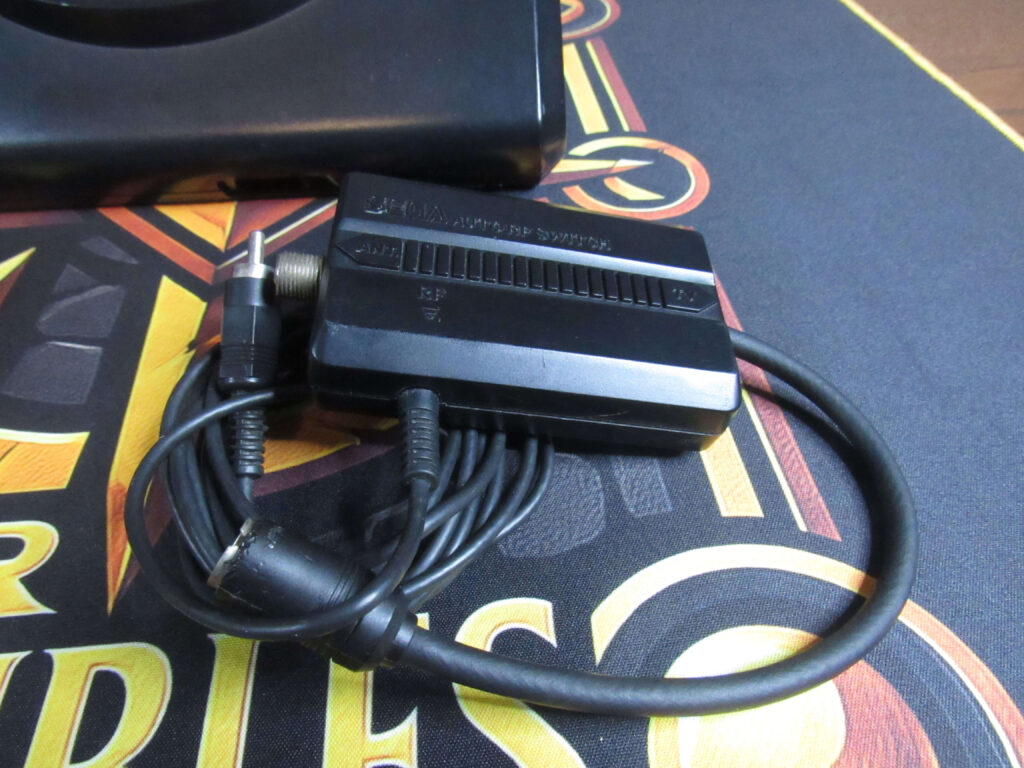
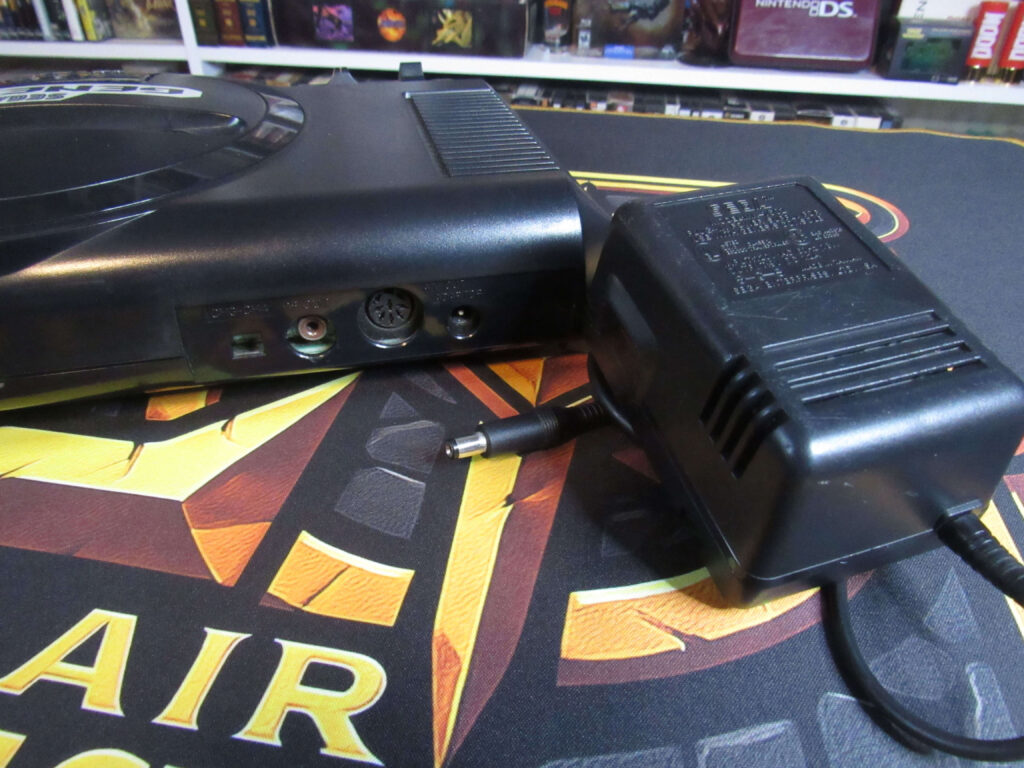
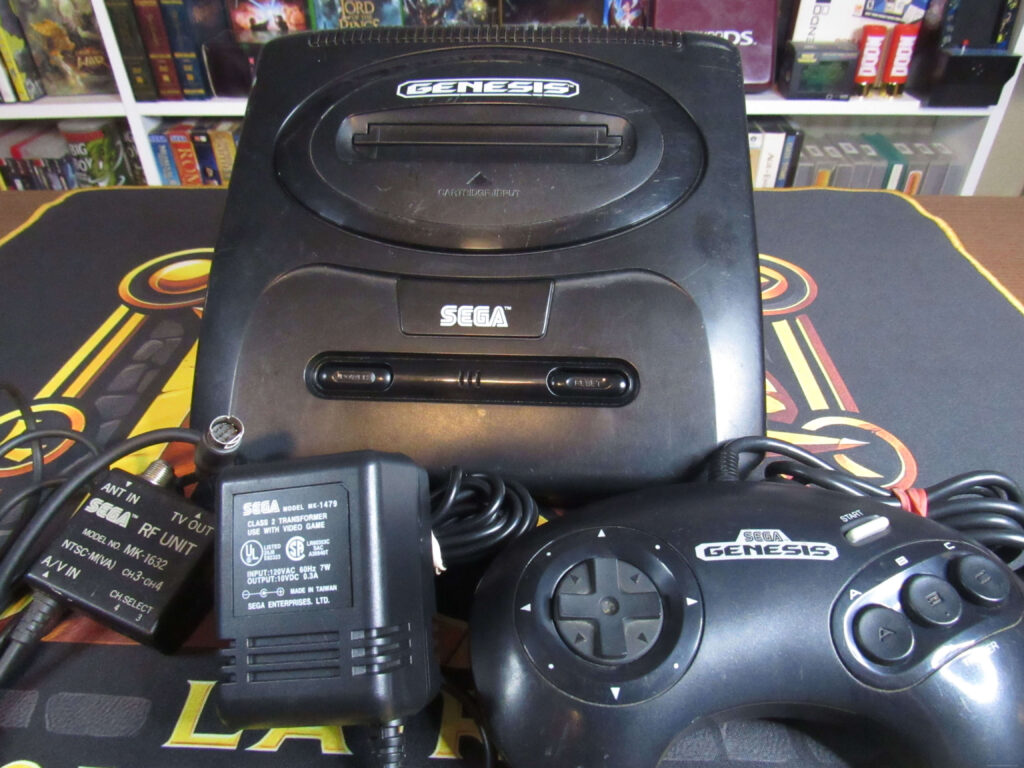
Video Output: Has a large round port with several pins — that’s the main video out. With the right cable, it gives you better picture and sound. There’s also a single screw-on TV port (RF Out) for older TVs, but the quality isn’t great. (pictured above)
Model 1 (1989): Big, beefy shell with the “High Definition Graphics” badge on early runs. Great sound quality thanks to the Yamaha YM2612 chip. Audiophiles still prefer it.
Power Supply: Uses the big, heavy plug-in brick (Model 1602). The tip is larger, so only this one fits. Using the wrong one can damage the system.
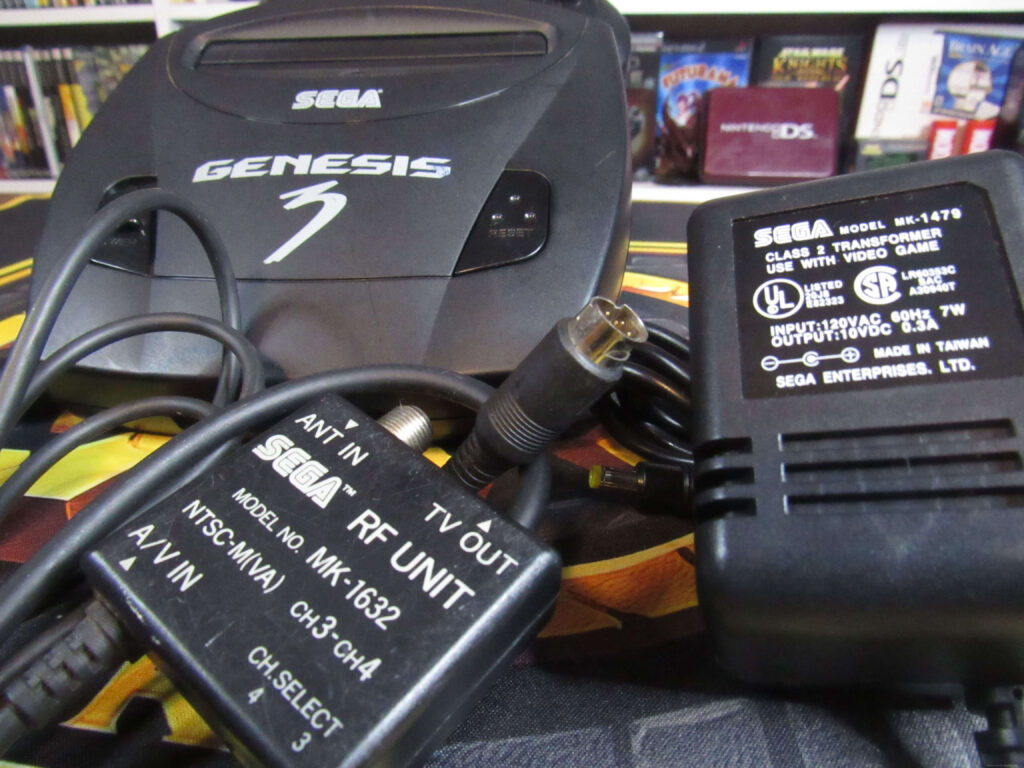
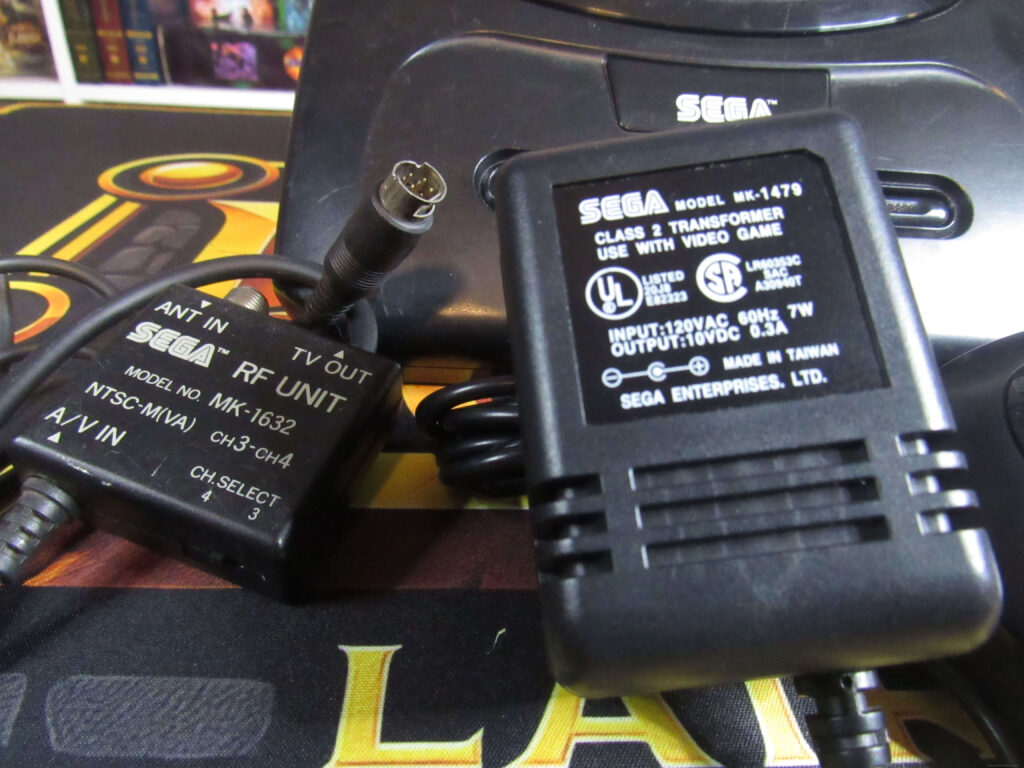
Video Output: Has a smaller round port with pins for the video cable, giving you cleaner video and stereo sound. Works with the MK-1632 RF Unit, which plugs into the screw-on port and lets you play through Channel 3 or 4 on older TVs.
Model 2 (1993): Slimmer, cheaper redesign. Dropped the headphone jack, smaller RF shielding, slightly muddier audio.
Power Supply: Uses the slimmer brick (MK-2103). Not the same as Model 1 — it won’t fit. The Model 3 adapter (MK-1479) also works here, since it uses the same plug size and voltage, but the MK-2103 was the one officially packed in.
Video Output: Uses a simplified video port that works with most Model 2 AV cables. Supports the MK-1632 RF Unit for Channel 3/4 play on older TVs. No expansion port here, so you can’t hook up a Sega CD or 32X. Built cheaper, but it still runs Genesis games fine.
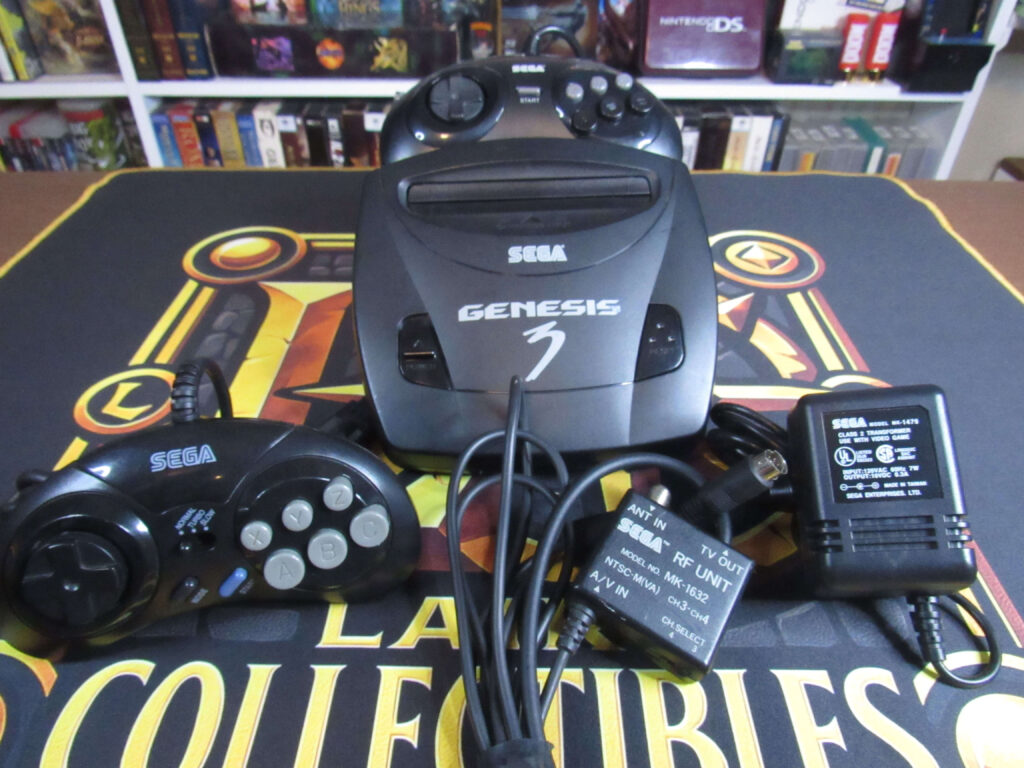
Model 3 (1997, Majesco release): Budget version. Tiny, no expansion port, cheaper build. Compatible with most games but not all accessories.
Power Supply: Uses the MK-1479 adapter, made specifically for this budget version. Since the plug and voltage are the same, it can also power the Model 2. Not compatible with the Model 1.
Accessories & Add-Ons
- Sega CD (1992): CD-based add-on. Cool library (Lunar, Snatcher), but expensive and fragile.
- 32X (1994): Mushroom-shaped add-on meant to bridge 16-bit and 32-bit. Poor library, quickly abandoned. Collectible oddity today.
- Controllers:
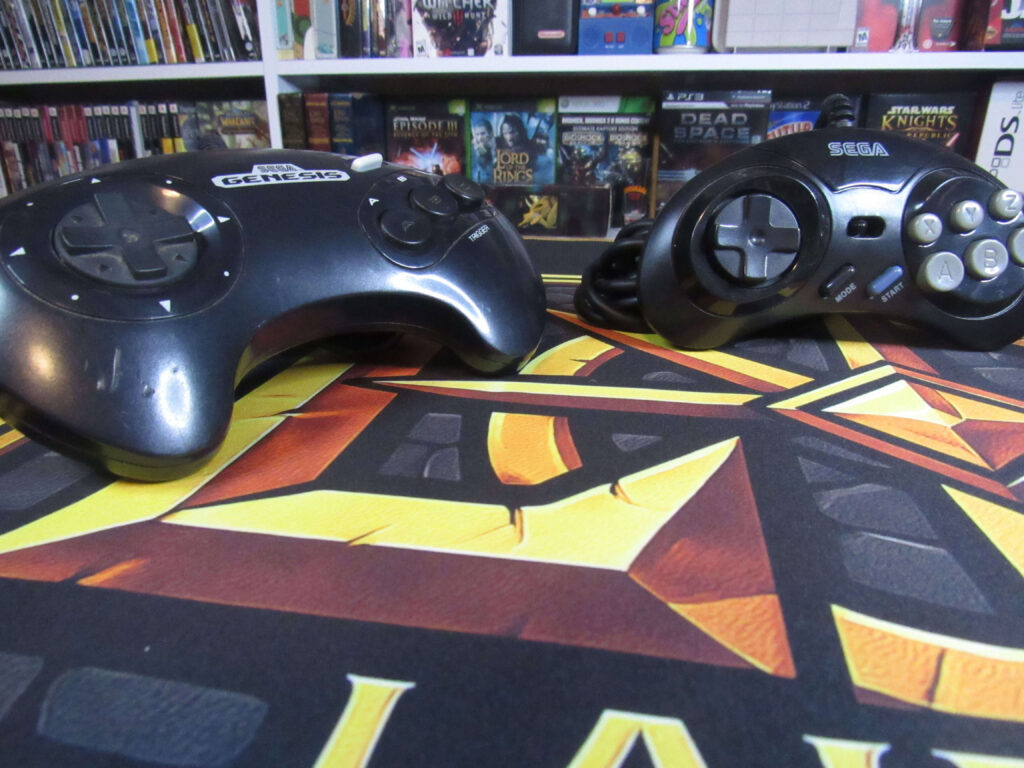
- 3-button original pad — solid but limited.
- 6-button pad (1993) — essential for fighting games like Street Fighter II.
- Power Base Converter: Let you play Sega Master System games on your Genesis. Clever backward compatibility move.
- Controllers:
- 3-button original pad — solid but limited.
- 6-button pad (1993) — essential for fighting games like Street Fighter II.
- Power Base Converter: Let you play Sega Master System games on your Genesis. Clever backward compatibility move.
Cheat Codes & Secrets
- Sonic the Hedgehog – Level Select:
At title screen → Press Up, Down, Left, Right, then hold A + Start. - Mortal Kombat – Blood Code (Genesis version only):
ABACABB → unlocks full gore. This code alone helped Genesis outsell SNES for a time. - Ecco the Dolphin – Debug Mode:
Press Start, then Right, B, C, B, C, Down, C, Up.
Genesis was the console of cheat codes and playground secrets.
Collecting in 2025
- Consoles:
- Model 1: $120–$200 depending on condition.
- Model 2: $100–$150.
- Model 3: cheaper, $60–$100, less desirable.
- Add-Ons:
- Sega CD and 32X complete in box can hit $300–$500.
- Games:
- Commons (sports titles) are cheap.
- Key titles (Sonic 3 & Knuckles, Streets of Rage 3, MUSHA): Highly Collectible.
- Sealed copies? Depends on the title — some Sonic titles sealed have crossed into the thousands.

Fun Facts & Collector Tips
- Early Model 1s with the “High Definition Graphics” text are more desirable.
- Sega of America was scrappy — they pushed aggressive marketing that directly mocked Nintendo.
- Keep an eye out for cardboard box releases — Sega used both clamshell cases (durable) and flimsy cardboard (rare to survive in mint condition).
Where to Buy
Wrap-Up
The Sega Genesis wasn’t just a console — it was a war machine. It gave us Sonic, Streets of Rage, Golden Axe, and the infamous blood code. It fought Nintendo toe-to-toe and, for a brief window, actually won. For collectors, it’s a system with layers — from Model 1 audio purists to 32X oddballs.

