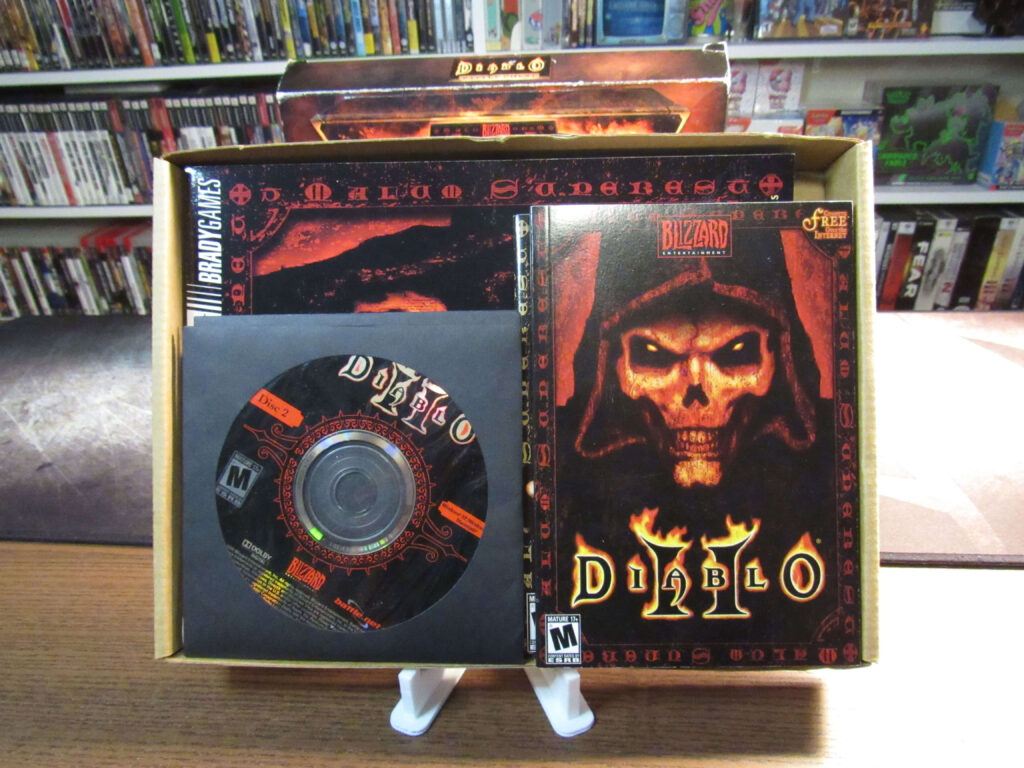
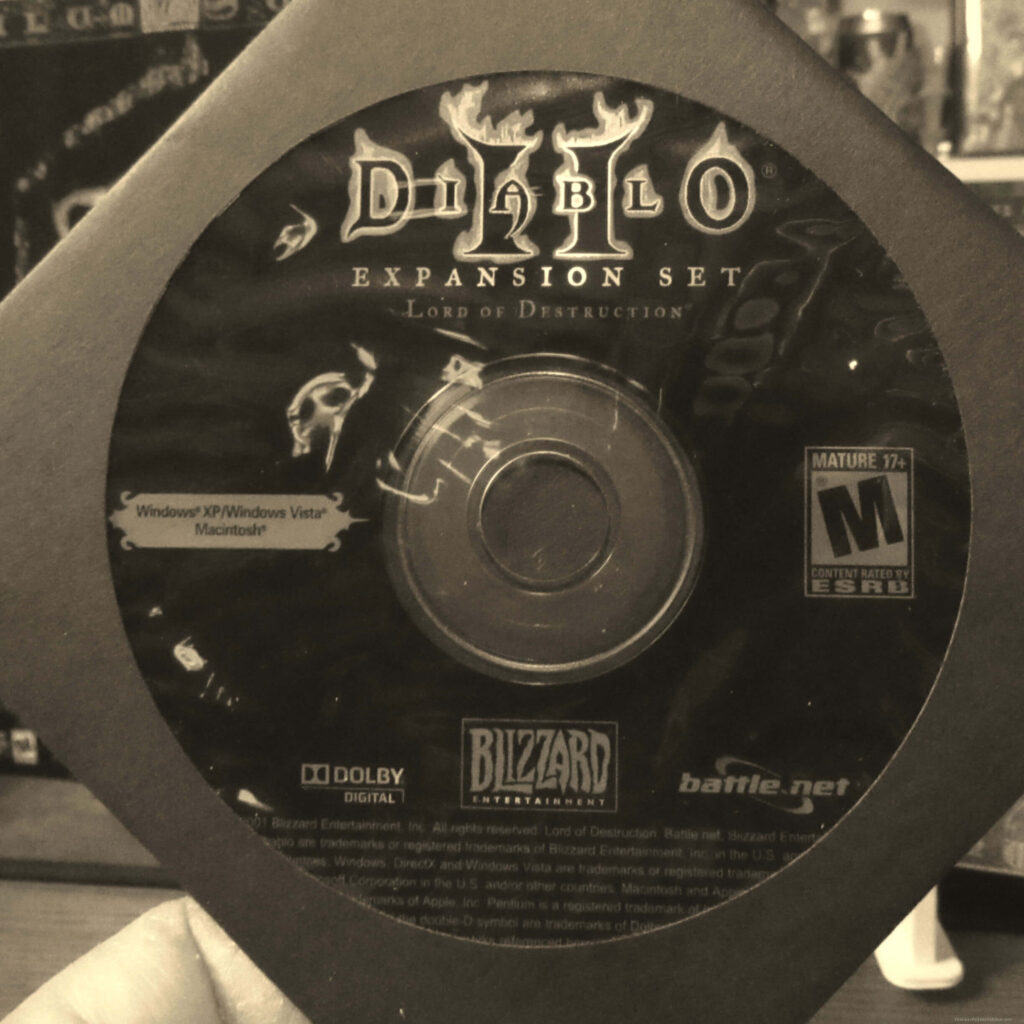
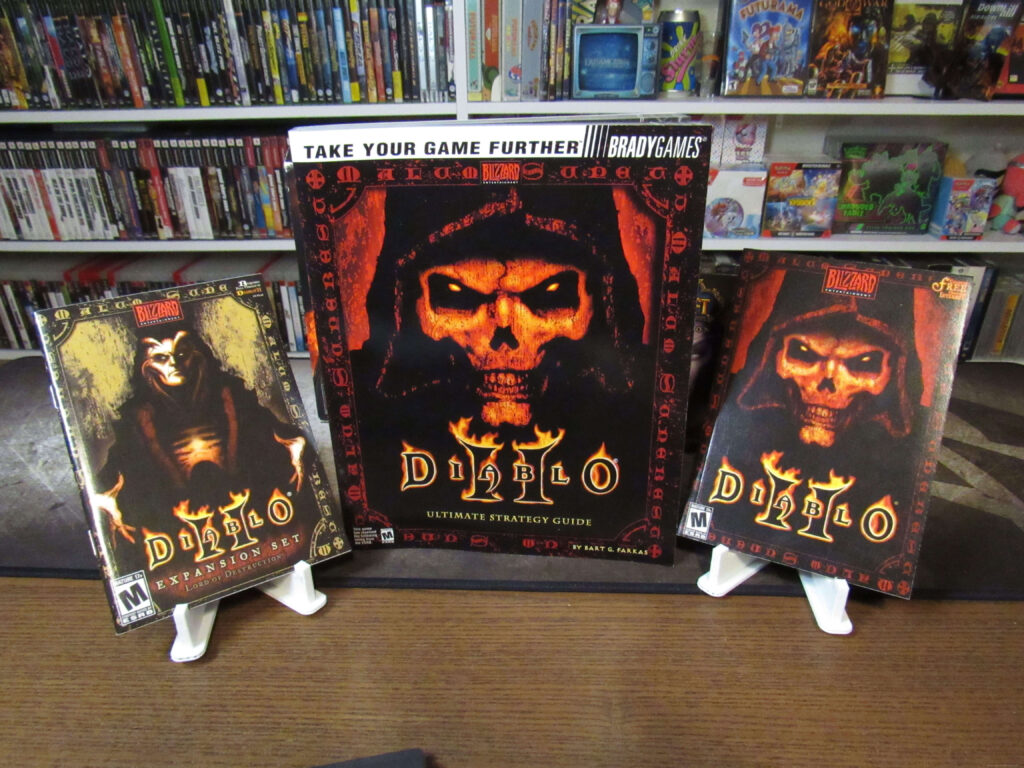
Every collector has that one box that feels heavier than it should — not because of the weight, but because of what it meant. For PC gamers of the early 2000s, that box was the Diablo II Battle Chest. It wasn’t just another Blizzard release; it was the final era when you could walk into a store, feel the glossy foil of a Blizzard big box, and know you were holding something worth keeping.
Back then, we didn’t talk about “digital downloads.” We talked about the Battle.net login queue, CD keys on faded inserts, and the constant whirr of a disk drive loading Tristram.
Collector’s History
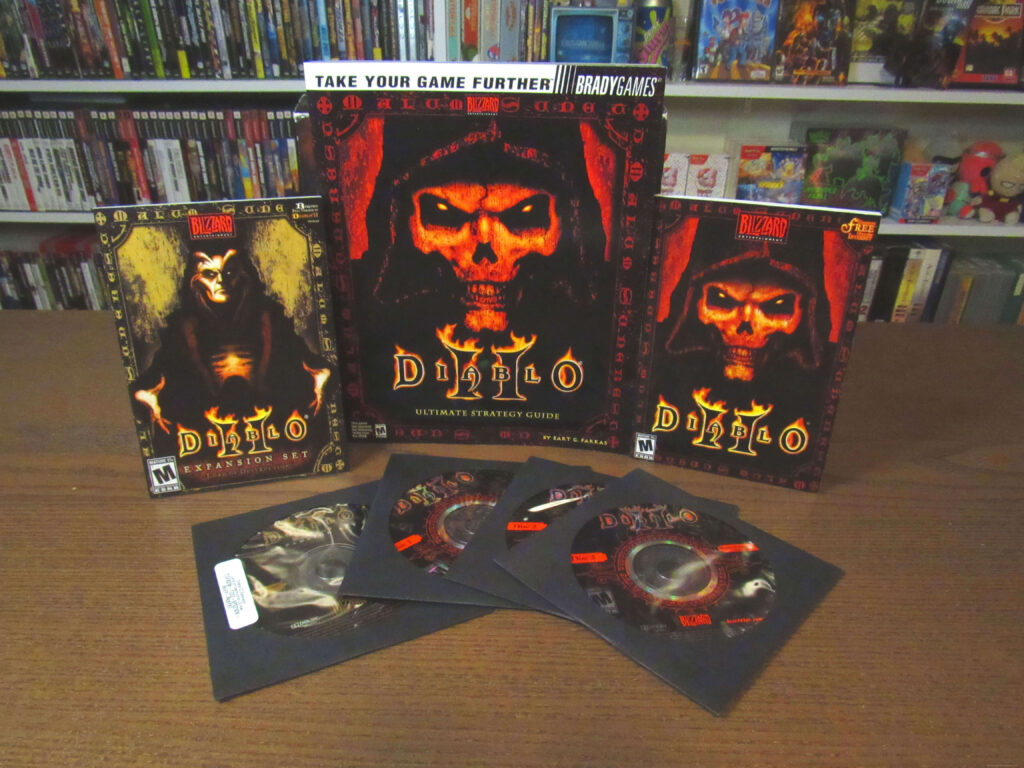
Released in 2003, the Diablo II Battle Chest bundled three essential pieces of Blizzard’s dark legacy:
- Diablo II (2000)
- Diablo II: Lord of Destruction (2001)
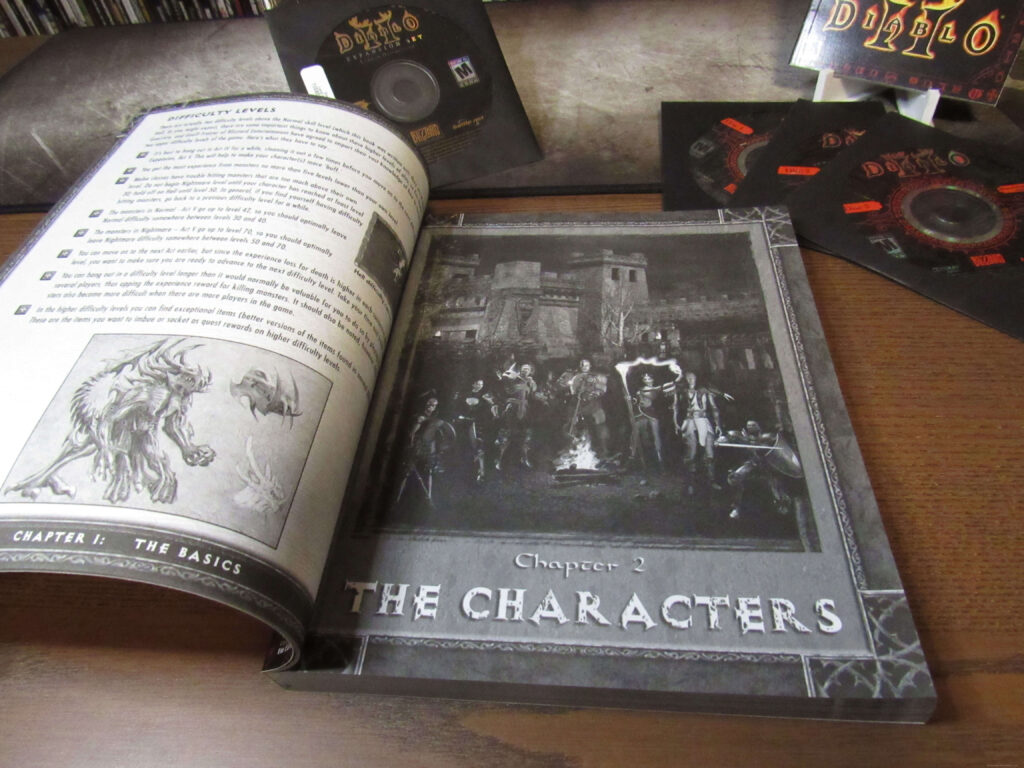
- A full official strategy guide (BradyGames or Prima, depending on run)
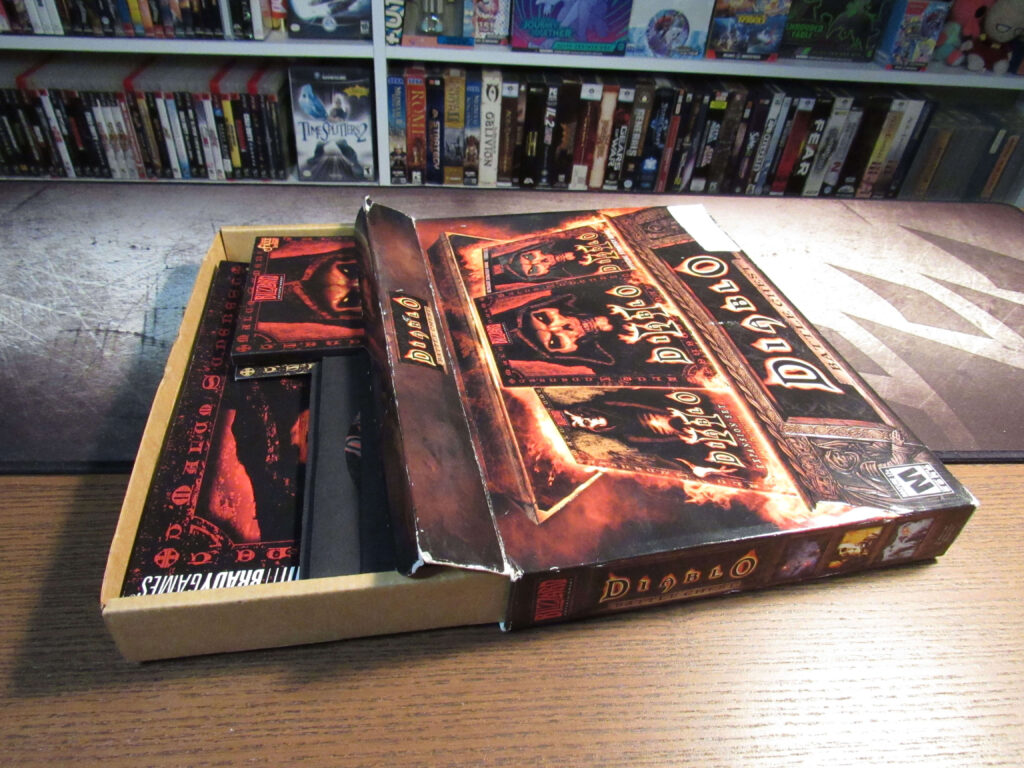
The box was massive — a two-inch spine, metallic foil artwork, and that unmistakable red glow of the Diablo logo that made it jump off shelves. It was part product, part altar piece.
The Battle Chest represented Blizzard’s mastery of presentation. Even two years after Lord of Destruction launched, the company wasn’t done selling the experience — it was canonizing it. Inside, the black hybrid discs shimmered with gold lettering that read PC/Mac Hybrid, a subtle flex from an era when cross-platform still meant something.
By 2004, Blizzard had sold roughly 6 million combined copies of Diablo II and its expansion. Over the next decade, the Battle Chest pushed that number toward 11–12 million units worldwide. Few PC titles in history can claim that kind of endurance.
Legacy and Last Login
The original Diablo II servers went live in June 2000 and remained online until August 2021 — twenty-one years of official Battle.net service. Let that sink in: players who installed the game in high school could still log in as adults with kids of their own.
At its peak, Blizzard never released official concurrency numbers — the company guarded that data like a state secret. What we do know is that in the early 2000s, over a million unique accounts were active each month, and by 2010, Blizzard claimed 11 million users still playing Diablo II and StarCraft across Battle.net.
Diablo II’s world didn’t end when the servers did; it simply moved underground. Private networks, LAN play, and eventually Diablo II: Resurrected kept the blood pumping. But the original Battle Chest boxes, the ones with “Play Online with Battle.net” banners printed on their edges, now serve as physical fossils of that first online age.
Lair Note → Any box that still carries that “Play Online” label isn’t just packaging — it’s a monument to the world’s longest-running PC multiplayer network of its time.
Retail Distribution & Storefront Era
Back when Diablo II Battle Chest hit stores, you didn’t buy it with a click. You went to the store and baught it.
- Electronics Boutique (EB Games): The PC wall behind glass — that’s where it sat. You could see it from across the store, glowing faintly under fluorescent lights. Those red EB $39.99 stickers have become collector badges now.
- GameStop (Post-Merger): After the EB merge in 2005, GameStop carried the thinner-box reprints. Often stacked beside Warcraft III Battle Chest and StarCraft Battle Chest, forming Blizzard’s holy trinity.
- Best Buy, Circuit City, and CompUSA: These stores defined PC retail in the early 2000s. The Battle Chest lived in their software aisles for years, often under “Top Sellers” until 2010.
- Walmart and Target: Widespread, yes, but their later stock was the slim reprint version — silver discs, no guide, and a fraction of the soul.
- KB Toys: Rare sightings. Mostly console titles, but an occasional clearance copy slipped in near the checkout racks.
- Fry’s Electronics: The last great PC game aisle in America. Fry’s carried Diablo II Battle Chest long after others dropped it — sealed copies still sat behind glass in 2015. The Fry’s price tag was white with red text, often $29.99, sometimes $19.99 clearance.
Lair Note → If your Battle Chest still has a Fry’s or EB Games sticker, leave it. Those old price tags are part of the relic — timestamps from the final retail age of PC gaming.
Collector’s Tips & Variants
- First Edition (2003–2004)
- Foil-front box, thick spine (~2″), gold-lettered hybrid discs, full strategy guide, foam insert.
- True collector’s edition — the one with display value and long-term investment potential.
- Current sealed value: $150–$250+.
- Matte Edition (2005–2007)
- Same art, no foil, slightly thinner box, no foam insert.
- Still collectible, less shine, more mass-produced.
- CIB: $60–$80 range.
- Thin Box Reprint (2008–2013)
- Silver or white discs, smaller guide or none at all.
- Budget print; considered common.
- Market value: $25–$40.
- DVD Transition Edition (2014–2016)
- Slimline packaging, single DVD installer.
- Collector value minimal but symbolic as the final physical release.
Comparative Rarity Chart
| Rank | Title | Year Range | Packaging Type | Collector Grade | Typical Sealed Value (2025) |
|---|---|---|---|---|---|
| 1 | Diablo II Battle Chest | 2003–2004 (foil) | Thick foil box, gold discs | Vault-Grade | $200–$300+ |
| 2 | Warcraft III Battle Chest | 2005–2008 (glossy) | Matte thick box | High | $120–$180 |
| 3 | StarCraft Battle Chest | 1999–2004 (blue lightning) | Gloss box | Moderate | $80–$120 |
Blizzard’s Quiet Numbers
Blizzard has always played its stats close to the chest. They rarely publish active player counts, preferring milestone phrases like “millions of heroes have battled the forces of Hell.” It’s corporate mythology — the kind that fuels mystery.
But there’s no doubt Diablo II earned its reputation. At its cultural peak, it outlasted nearly every competitor from its generation. While other studios shut servers down after a few years, Blizzard kept theirs humming for two decades.
That’s why sealed Battle Chests now feel like artifacts from a secretive empire — physical proof of success Blizzard never fully admitted to.
Collector’s Item Alert
The foil-front, thick-spined, gold-disc Diablo II Battle Chest is the definitive collector’s edition. It marks the end of the true PC big-box era and the beginning of Blizzard’s digital age.
If you have one sealed, it’s not just software — it’s a museum piece.
The Loot Crate Heat-Reactive Mug
Blizzard didn’t stop at box sets. Around 2018, a Loot Crate exclusive slipped quietly into circulation — a Diablo heat-reactive coffee mug. Black when cold, it revealed fiery red infernal art once filled with something hot, a clever nod to Sanctuary’s eternal flames. (Click to Find)
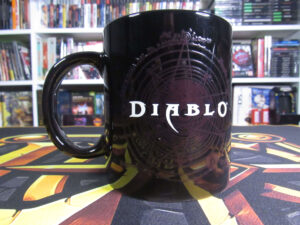
It wasn’t a limited numbered run, but over time it became a small cult collectible — a desk-sized relic for those who missed the Battle Chest era yet still wanted a piece of Blizzard’s darkness in their morning routine.
Lair Note → These mugs surface occasionally on eBay for twenty to thirty bucks. If you find one with the Loot Crate Gaming Edition box intact and the coating unblemished, that’s the version worth sipping — and saving.

Keeper’s Final Note
This one belongs on the top shelf.
The Diablo II Battle Chest wasn’t just another compilation — it was Blizzard’s swan song for the boxed era, built with weight, artwork, and permanence in mind. You didn’t just install a game from it; you committed to a world that refused to die, running for 21 years until the final Battle.net servers went quiet.
Every sticker, every spine crease, every glint of foil on that box carries the energy of a time when gaming felt physical — when you bought a world in a box and could almost smell the factory ink.

